




Skanste Riga Real Estate: Investment Location and Growth District Guide
Skanste is one of the most strategically important development zones in Riga, positioned as the city’s primary expansion corridor for modern residential, commercial, and mixed-use projects. Unlike historic central districts such as Klusais Centrs, Skanste represents the future-facing side of Riga’s real estate market, where large-scale development is still possible and long-term capital growth is driven by infrastructure, business activity, and urban planning.
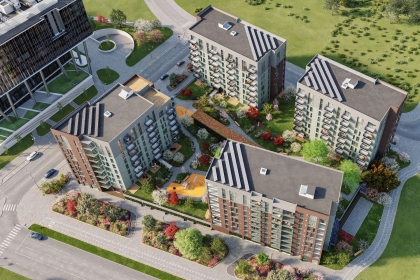
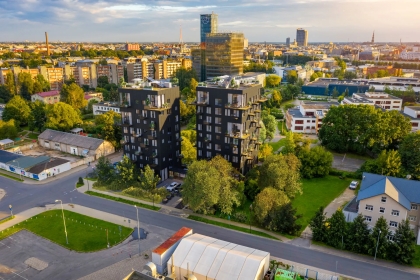
From a structural perspective, Skanste is being developed as Riga’s modern business and financial district, often compared to a Central Business District (CBD) model within the local context. The area has already attracted office complexes, international companies, and large residential developments, creating a shift in demand toward newly built, energy-efficient properties. This makes Skanste one of the few locations in Riga where investors can access new-build inventory at scale, rather than relying on renovated historic stock.
The real estate supply in Skanste is fundamentally different from older parts of the city. Instead of fragmented small developments, the area is defined by master-planned projects and multi-phase residential communities, often integrated with office spaces, retail components, and public infrastructure. Sub-areas such as the New Hanza district further reinforce this structure, introducing coordinated urban planning that supports long-term value creation at a district level rather than individual building performance.
From an investment standpoint, Skanste offers a growth-oriented profile. Capital appreciation potential is linked to ongoing development, increasing business activity, and the gradual transformation of the area into a fully established urban hub. Compared to central historic districts, entry prices are typically more accessible relative to future positioning, which creates upside potential as the district matures. However, this also means that Skanste carries a slightly higher development-stage risk compared to fully established locations.
Rental demand in Skanste is supported by a growing population of professionals working within the district and nearby business zones. The tenant profile is typically long-term and employment-driven rather than tourism-based, which contributes to stable occupancy levels. While rental yields are moderate, similar to the broader Riga market, the key advantage lies in future demand expansion as the district continues to develop.
From an urban connectivity perspective, Skanste benefits from its proximity to Riga’s central areas while still offering space for expansion. The district is located within a short distance of the city centre, providing access to key commercial, cultural, and administrative hubs without the density constraints of older neighborhoods. This balance between accessibility and development capacity is one of the main reasons Skanste has been prioritized in Riga’s long-term urban strategy.
In the context of residency-linked real estate investment, Skanste is particularly relevant due to the availability of new developments that can meet required investment thresholds. However, as with all property-based residency frameworks in Latvia, eligibility depends on the specific property, valuation, and transaction structure rather than the location alone. The presence of modern developments increases the likelihood of qualifying assets, but compliance must be assessed at the individual unit level.
Strategically, Skanste should be positioned as a growth-driven urban district with expanding infrastructure, modern real estate supply, and long-term appreciation potential. It is best suited for investors who are looking beyond immediate prime positioning and are instead targeting future value creation within Riga’s evolving city structure. Compared to established districts, Skanste offers a different type of opportunity—less about historical prestige and more about forward-looking development and scalability.